Source Portable Low Noise Diesel Generator for construction, events, and homes
Find 30 verified options for a Portable Low Noise Diesel Generator suitable for mobile power needs. Buyers can compare specifications including power output, voltage, and cooling methods from suppliers in China.
Key considerations
Products List


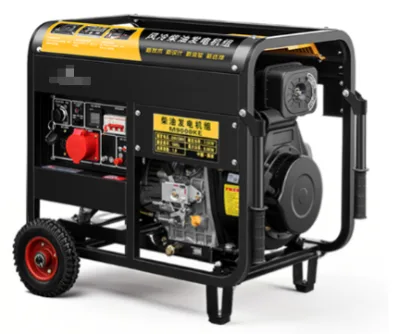


Reliable Low-Noise Outdoor Diesel Generator with a Capacity of 25 kVA
$2174.00 - $2674.00
MOQ: 1 Pieces

High-Performance Soundproof Portable Diesel Generator for Mobile Applications
$899.00 - $6999.00
MOQ: 1 PC


Comprehensive Sourcing Guide
Strategic Sourcing Guide for Portable Low Noise Diesel Generators
Navigating the global market for portable low noise diesel generators requires a disciplined approach that balances technical performance with supply chain reliability. Buyers seeking these units often prioritize mobility, acoustic management, and power stability for applications ranging from construction sites to emergency backup scenarios. The following guide synthesizes observed market data and technical attributes to provide a framework for evaluating potential suppliers and selecting the right equipment. This analysis focuses on the specific characteristics found in current listings, ensuring that procurement decisions are grounded in verified product attributes rather than speculative claims.
Technical Specifications and Power Configuration
The core of any generator procurement decision lies in understanding the technical specifications that define performance. Based on current market observations, portable low noise diesel generators typically feature electric start mechanisms, which streamline operation in emergency or remote settings. The power output for many units in this category falls within the 5-10kW range, suitable for powering essential loads in mobile or temporary environments. It is critical to note that while some listings indicate a specific power rating of 10kW/12kVA with a rated current of 35A, others may vary, necessitating a thorough review of the datasheet for the specific model.
Frequency stability is another paramount specification. The observed data indicates that these units generally operate at 50/60 Hz, allowing for compatibility with various international grid standards and equipment requirements. The alternator type also plays a significant role in power quality; high-performance units often utilize AC rotating exciter modes to ensure stable voltage output. Furthermore, the rated voltage options are diverse, encompassing 110V, 220V, 230V, 240V, 380V, 400V, and 480V. This flexibility allows buyers to match the generator to specific regional electrical standards or multi-phase industrial requirements. The cooling method is predominantly air-cooling, which is standard for portable units due to its simplicity and lack of water dependency, though the specific noise level is often targeted around 65dB to meet low-noise requirements.
Acoustic Management and Design Engineering
The "low noise" designation in the core keyword is a critical differentiator that impacts both user experience and regulatory compliance. In the observed product listings, noise levels are explicitly cited at 65dB, a figure that buyers should verify against local environmental regulations for residential or urban construction zones. The design style is noted as contemporary, often integrating sound-dampening enclosures that contribute to the acoustic profile. The physical shape of the units varies, with options including round, oval, and square configurations, which can influence how the generator fits into specific site layouts or transport vehicles.
Installation methods are typically fixed for these units, suggesting that while they are portable in terms of transport, they are designed to be stationary during operation to maximize efficiency and safety. The excitation mode, specifically the AC rotating exciter, works in tandem with the air-cooled system to maintain performance under load without excessive heat generation. Additionally, the fuel tank capacity is often customizable, allowing buyers to extend runtime based on specific project duration needs. This customization extends to the color and overall aesthetic, enabling branding or camouflage for specific operational environments. The "Low Noise Automation Type" classification further suggests that these units may include automated features to manage load and noise output dynamically.
Material Composition and Durability Features
The longevity of a portable generator is directly tied to the materials used in its construction. The supply chain for these units utilizes a wide array of metals and alloys, including brass, carbon steel, aluminum, aluminum alloy, galvanized steel, copper, iron, magnesium aluminum alloy, stainless steel, and zinc alloy. The selection of these materials is driven by the need for durability, corrosion resistance, and weight reduction. For instance, aluminum and aluminum alloys are frequently used for the engine block or housing to reduce overall weight, while galvanized steel and stainless steel provide robust protection against the elements.
Buyers should verify the "Alloy or Not" status, as some listings specify "Non-Alloy" for certain components, which may impact the structural integrity or weight profile. The "Secondary or Not" attribute also provides insight into the manufacturing process, with "Non-Secondary" indicating primary manufacturing standards. Key features highlighted in the market include water resistance, durability, anti-corrosion properties, and fire resistance. These attributes are essential for units intended for outdoor use, where exposure to rain, humidity, and extreme temperatures is common. The thickness of the housing and internal components is often customizable, allowing for enhanced protection in harsh environments. The warranty period for these units is typically one year, which serves as a baseline for quality assurance expectations.
Compliance, Standards, and Certification Verification
When sourcing industrial equipment, verifying compliance with international and local standards is non-negotiable. While the provided data mentions "Standard" and "Customized" product standards, it does not explicitly confirm specific certification bodies like UL for all listed units. Buyers must exercise caution and not assume that a product listing automatically satisfies specific safety certifications unless explicitly stated in the supplier's documentation. The observed data references a "Standard" product type and "Customized" product standards, indicating that compliance may vary by manufacturer and specific model configuration.
The "Land Use" condition of use and "Landuse Type of Unit" classification suggest that these generators are designed for terrestrial applications, but buyers must confirm if the specific unit meets local emissions and noise regulations for the intended deployment location. The "Project Solution Capability" includes graphic design and 3D model design, which can be leveraged to ensure the generator fits into a broader site plan or safety protocol. It is vital to request test results and certification documents directly from the supplier, as the presence of a standard like UL 142 in background knowledge does not guarantee that every listed product in the market has achieved this status. Procurement teams should treat all certification claims as observations to be verified rather than guaranteed attributes.
Cost Drivers and Procurement Parameters
Understanding the cost structure of portable low noise diesel generators is essential for budgeting. The observed price range in the market spans from $250 to $38,958 USD, a wide variance that reflects differences in power output, brand reputation, material quality, and customization levels. The Minimum Order Quantity (MOQ) is consistently observed at 1 unit, indicating that these products are available for single-item purchase, which is advantageous for small projects or trial orders. The selling units are listed as "Single item," further supporting flexible procurement strategies.
Several factors drive the final cost. Customization options, such as fuel tank capacity, color, and thickness, add to the base price. The inclusion of advanced features like micro-computer control, automatic diesel generator systems, and specific alternator brands (e.g., Leroy-Somer) also influences pricing. The origin of the product, with listings from Zhejiang, China, Shandong, China, and Weifang, China, can impact shipping costs and lead times. Buyers should analyze the total cost of ownership, including the cost of spare parts, which are often listed as "Free Spare Parts" in after-sale service packages, and the availability of online technical support. The "Reinforced Plastic Film (Free)" packing standard suggests that basic protection is included, but specialized shipping requirements may incur additional costs.
Supplier Evaluation and After-Sales Support
Selecting the right supplier is as important as selecting the right machine. The market data highlights a robust after-sales service ecosystem, including online technical support, onsite installation, onsite training, onsite inspection, and return and replacement policies. These services are critical for ensuring that the generator performs as expected and that any operational issues are resolved quickly. The "Project Solution Capability" extends to cross-category consolidation and total solutions for projects, indicating that some suppliers offer comprehensive support beyond just the hardware.
Buyers should evaluate suppliers based on their ability to provide detailed technical documentation, their responsiveness to inquiries, and their track record in the specific regions where the generator will be used. The "Place of Origin" and "Prod Origin" details, such as Weifang or Zhejiang, can be used to verify the supplier's location and logistical capabilities. It is advisable to request references or case studies from previous clients, particularly for large-scale projects. The warranty period of one year is a standard benchmark, but buyers should clarify the terms of coverage, including what constitutes a defect versus normal wear and tear. The availability of "Other" services suggests that suppliers may offer bespoke solutions, which should be negotiated clearly before finalizing the contract.
Long-Term Procurement and Operational Considerations
For long-term procurement, buyers must consider the lifecycle of the generator and its integration into ongoing operations. The "Usage" classification includes common units, standby units, and emergency crew applications, each requiring different maintenance schedules and operational protocols. The "Four Stroke" engine type is standard for diesel generators, offering a balance of efficiency and durability, but buyers should verify the maintenance requirements for this specific configuration. The "Conditions of Use" are listed as "Land Use," which implies that the generator is not designed for marine or aviation applications without specific modifications.
Future-proofing the procurement involves selecting units that can adapt to changing power needs. The customizable nature of the product, from fuel tank capacity to voltage output, allows for scalability. Buyers should also consider the "Secondary or Not" attribute, ensuring that the unit is a primary power source if required for critical operations. The "Design Style" being contemporary suggests that the units are built with modern manufacturing techniques, which may facilitate easier integration with smart grid technologies or remote monitoring systems. Finally, the "Shape" and "Dimensions" (e.g., 1000600740 mm, 720475530 mm, 920525640 mm) should be carefully measured against the available space in the deployment location to ensure a proper fit. By focusing on these long-term factors, buyers can secure a reliable power solution that delivers value over the lifespan of the equipment.
FAQs
What power output range is typical for these units?
Typical power output falls within the 5-10kW range, suitable for mobile power applications. Some specific models offer ratings like 10kW or 12kVA with a rated current of 35A to meet varied load requirements.
Can the fuel tank capacity be customized for longer runtime?
Yes, the fuel tank capacity is available as a customized option to extend operational duration. Buyers can request specific tank sizes to match project needs rather than relying on standard fixed capacities.
Which noise level is achieved by these low noise generators?
These units achieve a noise level of 65dB, designed to meet low-noise requirements for various environments. This acoustic profile supports use in residential areas or sites with strict noise regulations.
What voltage options are supported for international compatibility?
Rated voltage options include 110V, 220V, 230V, 240V, 380V, 400V, and 480V to ensure global compatibility. This flexibility allows the generator to interface with diverse regional electrical standards and equipment.
How is the cooling method implemented for portable units?
The cooling method is implemented using an air-cooling system, which is standard for portable applications. This design eliminates the need for water dependency and simplifies maintenance in remote or mobile settings.
What warranty coverage is provided for these generator units?
A standard one-year warranty is provided to cover manufacturing defects and ensure quality assurance. This baseline coverage is typical for the category, though specific terms may vary by supplier agreement.
Can the product be customized in terms of color and shape?
Yes, both color and shape are available as customized options to suit specific branding or site needs. Shapes can include round, oval, or square configurations depending on the design requirements.